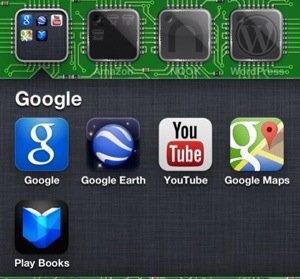
On AllThingsD yesterday, Walt Mossberg had a very good article about why you can find almost all of Google’s apps on Apple’s iOS as well as its own Android, but no Apple apps on Android, or on Windows Phone or Blackberry for that matter.
The most telling part is the following:
“This is obviously a lopsided situation in Apple’s favor. But it stems from the different business models of the big rivals. Google, Microsoft and Amazon are primarily software and services companies, though each makes some mobile hardware (Google through its Motorola subsidiary). But Apple, while famous for making good software, sells that software almost entirely through iconic and expensive hardware, from which it makes the vast majority of its money.
Essentially, it all leads to something that I have observed and stated (though not very publicly) for some time now. When looking at these big tech companies – or any company for that matter – and trying to understand and anticipate their behavior and actions, one need look at one thing first and foremost: Where does their money come from? “Show me the money!”, as it were.
Apple makes the bulk of its revenue from sales of its hardware devices. It has long held that it makes software and provides services, such as the iTunes Store and now iCloud, merely to make the experience on its devices better and more attractive to consumers. It has no incentive to release its software, such as iPhoto, iMovie, Garageband, and iWork, on other platforms. Those apps are all about making the iOS and Mac devices better.
Amazon derives most of its revenue from the sale of goods, physical and digital. So it wants access to those goods to be available anywhere and everywhere. That one is simple. The more outlets, the more sales.
Microsoft, notwithstanding the Xbox and the new Surface tablets, makes most of its money from software sales, primarily Windows and Office. So it should want the largest number of people possible to be able to buy and use its software, which should also mean putting its software out for as many platforms as possible. However, it has a unique dilemma in that it is the purveyor of the operating system for the up-until-now largest platform of them all, Windows PCs. But now Android, iOS, and even Mac OS X are rapidly eating into that platform, and therefore into one half of its two primary revenue streams. It has held back on releasing its other big cash cow, Office, on iOS and Android most likely out of fear of helping to further whittle away at Windows.
And finally, Google derives the bulk of its revenue from advertising sold through its search results. That is really why it made Android and made it “open source.” Google knew that mobile was going to be big, VERY big, and that mobile usage would eventually take away search activity from its web search services. So it got onboard with Apple’s iPhone from the beginning, and then released Android, all to ensure that its own search, not Microsoft’s or Yahoo’s or someone else’s, would continue to dominate search and therefore the lucrative advertising attached to search. Essentially, Google’s paying customers are really its advertisers, not the users of its services.
So Google wants as many of its services as it can get, all of which feed into its advertising machine, available on iOS. That is also the reason why, when Apple replaced Google Maps with its own mapping backend for the iPhone and iPad, it was an absolutley sure thing that Google would put out a new Google Maps app for iOS as soon as it could (though it may have let Apple stew in its own *stuff* for awhile). And as long as iOS devices continue to sell in large numbers, Google will continue to make its wares available to those users as best it can.
The takeaway here is that it’s always worth considering, when evaluating a company, for whatever reason, to look at where that company makes its money. That will tell you an awful lot about the company’s underlying motivations in what it does.
Just look for ’em to “show you the money.”
 iStuff User