September 11, 2013
I respect other’s opinions and choices. What each person chooses for themselves is their prerogative. But I read something today in an unlikely location that has prompted me to publish my own opinion on a certain matter. That matter – when and what to buy in smartphones.
Today, Ben Lovejoy over at 9to5mac.com, a site I follow and respect, posted an opinion piece entitled “Why I Love the iPhone 5s, and Why I’ll be Sticking with my iPhone 4S.” While he makes some good points, and his choice for his own purchases is his to make, I think he has missed at least one very important point if he, like me, lives in North America*. Carrier subsidies.
(*Alas, it turns out that Ben is British. So, his reasons do make sense for his situation. But not for me… or, I humbly suggest, for most in North America.)
In North America, the predominant business model over the last couple decades for the sale of cellphones to cell phone service subscribers has been one in which the monthly service charges are used to subsidize the purchase price of the phone hardware to the customer over the term of a two year (or three, for some of the Canadian carriers) contract. So, when you buy that supposedly US$199, $99, or even “free” phone, you also sign and agree to a service contract for at least $30 per month for a minimum of two years. Now, it is “widely accepted in the industry” that out of your $30 monthly data service charge, about $20 a month (maybe a little less, but $20 is reportedly pretty close for most carriers) is used by the phone company not to provide, maintain or improve your service, but to pay off the “real” price of that phone from the manufacturer. That is what’s called the subsidy. (We’re not even considering voice or text messaging charges here, though they may contribute some to that subsidy.)
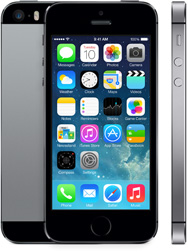
It is also widely believed that the subsidy amount for each iPhone is about $450. Hence the published “unsubsidized” or “off-contract” price of that new, 16GB iPhone 5s is not $199, but $649. So, while you only pay $199 upfront, Apple is actually getting $649: $199 from you and $450 from your phone company. The phone company makes up the $450 difference over the course of the 24 months of your contract. 24 times $20 is $480. And for the last couple decades that has seemed to work out well for everybody. Customers can get advanced, and otherwise quite expensive, electronic hardware for reasonable prices, manufacturers can earn good profits (if they are named Apple or Samsung), and phone companies continue to make money as well. Of course, this model is not used in many other countries around the world, and even America’s T-Mobile has changed its plans to something a little different than the subsidy model.
Under that subsidy model, if you bought a nice shiny new iPhone 4S two years ago in October, like I did, then your phone’s cost will be completely paid off right now. The phone companies like to tell you that you are now “eligible to upgrade.” Makes you feel special doesn’t it? Well, of course you are “eligible”, you’ve now completely paid for your current phone, right? And does the phone company also reduce your monthly service charge once you are “upgrade eligible?” Nope. That roughy $20/month subsidy portion of your service charge is now pure profit for them. They love that. After the two-year term of your contract has passed, if you do not buy a new phone, you are in effect giving money away and getting no value in return. Therefore, if you are on a service contract for your phone in North America, I submit that it makes sound financial sense to get a new phone at least once every two years (unless you like donating money to AT&T or Verizon).
And that’s what I have done ever since I got my first, original iPhone in 2007**. iPhone 3GS in 2009. iPhone 4S in 2011. It is now time for me to get a new phone. And that phone will be an iPhone 5s. While I have heard rumors that Apple is working on a larger iPhone to capture those customers who want something with a little bigger, perhaps more readable screen, I will still get a new phone this year rather than wait. Two years from now, if there is a bigger and better iPhone, I’ll get that. But I won’t give away what amounts to $240 just to wait until next year’s iPhone comes out.
(** The original iPhone in 2007 was not actually under the subsidy model, but that’s a different story.)
Oh, and don’t be fooled by the new upgrade programs the US carriers are now pushing. While T-Mobile’s JUMP program is marginally useful within their slightly different new plan structure, the “upgrade anytime” plans from Verizon and AT&T actually end up costing you more and you don’t even get to keep your old phone.
Now, some may ask, “Why not get something other than an iPhone, like a Samsung Galaxy S4, or an HTC One, or a Motorola Moto X, or a Nokia Lumia 1020?” Well, that’s another story entirely, so I’ll just keep it simple. The best reason for me is simply this: since I have had iPhones since 2007 and iPads since 2010, I have invested in literally hundreds of apps for those devices. To switch to a different smartphone operating system and app/content ecosystem would be to lose that investment. It’s the same reason it took me so long to make the switch from Windows to Mac… the apps. And unlike with Windows circa 2008, I am nowhere near being frustrated by and fed up with iOS, quite the opposite in fact.
 iStuff User